Article: Why Barocco Italiano's Makò cotton Lisle socks are superior.
Why Barocco Italiano's Makò cotton Lisle socks are superior.
There's no point in beating around the bush: there is cotton and then there is cotton; they are not all the same. Let's discover the differences between the various types together, but we'll start by saying that Makò Cotton belongs to the category of highest quality and craftsmanship for the production of Barocco Italiano socks.
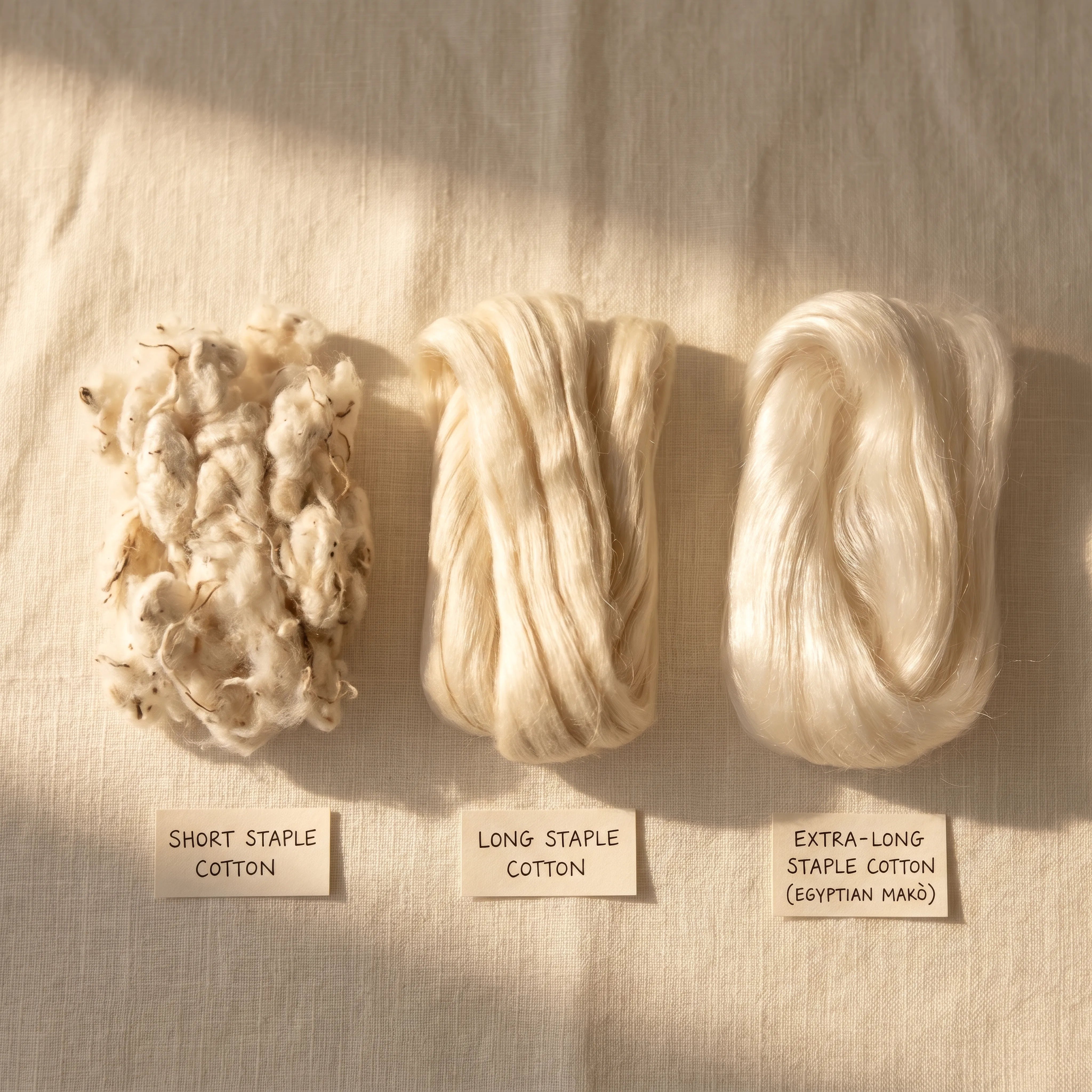
First of all, cottons are divided into 3 categories that define their quality:
- Short staple;
- Medium staple;
- Long staple;
- Extra-Long staple
The longer the cotton fiber, the better the final quality of the yarn and fabric, because the fibers require fewer "twists" to hold together and are less rigid.
This characteristic affects:
- Durability of the fabric;
- Luster;
- Uniformity of the thread;
- Softness to the touch.
Makò cotton processed as Filo di Scozia belongs to the category of extra-long staple cottons: this is where the real difference compared to generic cottons used in the mass market begins.
Extra-long staple Makò Filo di Scozia cotton: lasting comfort
Makò Filo di Scozia cotton belongs to the family of extra-long staple cottons, meaning it has longer and more regular fibers compared to common cottons. This characteristic allows the cotton to be spun with less twist and produces a smoother, more uniform, and stable thread.
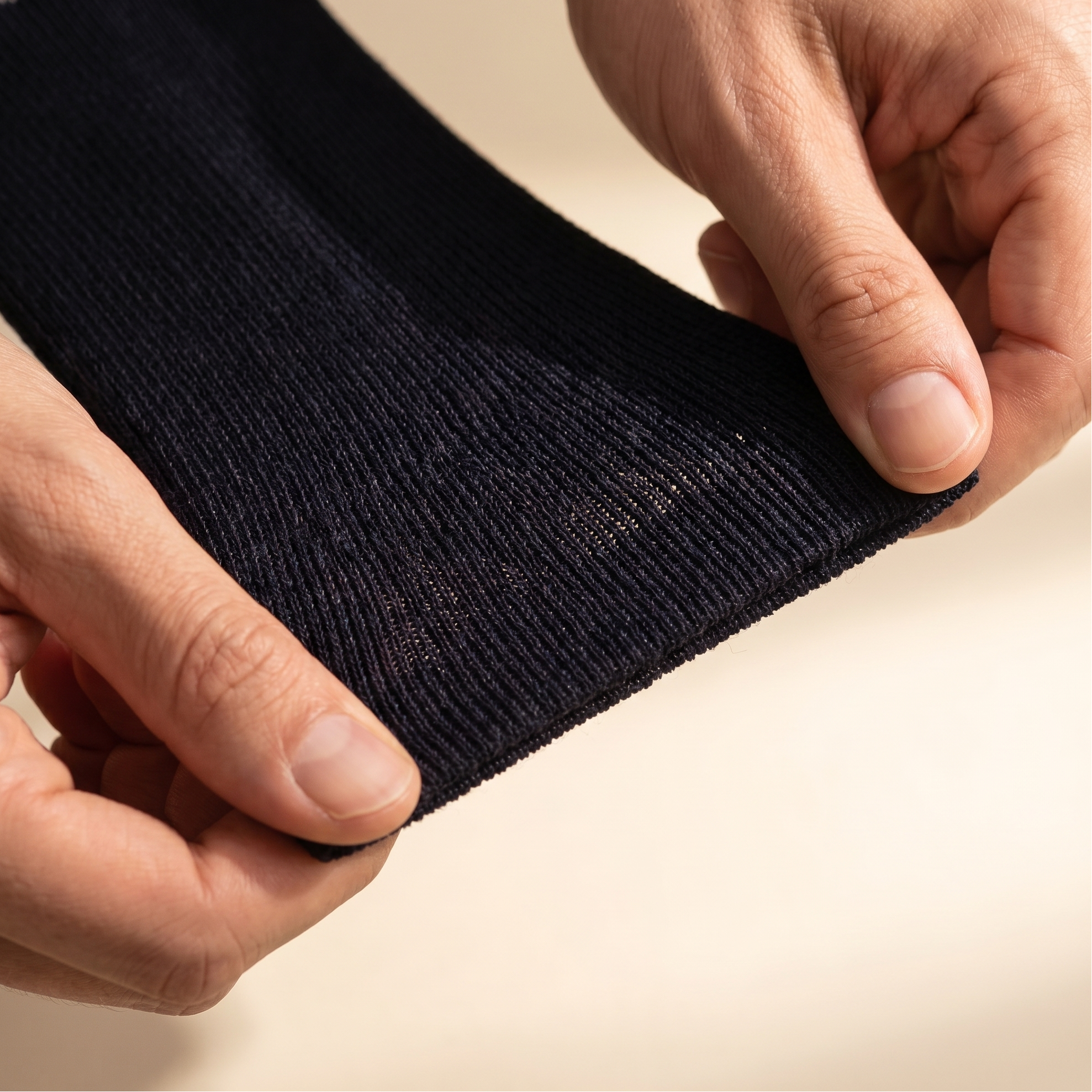
The result on the skin is immediate: the Makò fabric is softer, with a "silky" but natural feel, reduces friction, and makes the socks comfortable even after many hours inside shoes. The surface is more compact and clean, with less visible fuzz and the slight sheen typical of high-end cottons.
Over time, the long fibers make the fabric less prone to pilling and deformation: the sock maintains its shape, color, and comfort for longer, the cuff remains stable, and the heel and toe better resist wear and tear.
Makò costs more because it comes from selected cultivars, lower yields, and more meticulous processing, but this difference translates into a product that lasts for years instead of months. With socks, the choice is simple: with short-staple cotton, you buy immediate savings; with long-staple Makò cotton, you buy comfort, aesthetics, and durability. And in the long run, that is where the true value is seen.
Short-staple cotton: when price dictates
Short-staple cotton is typical of budget products and fast fashion. Shorter fibers cost less, are easy to grow and process, and allow for the production of large quantities at a low cost. You feel the flip side on your skin and see it after a few washes.
To hold together, short fibers require more twist: the thread becomes more rigid, and the fabric more rough and less pleasant to the touch. With use and washing, pilling easily appears, the fabric tends to harden, lose its shape, and look "tired" in a short time.
For a sock that is in contact with the skin all day, this means less comfort, more friction on the heel and toe, cuffs that give out, and the appearance of a worn-out garment after one season.
Short-staple cotton makes sense only when the sole priority is spending as little as possible and accepting a short product life.