

History
In 1991, in the heart of Salento, Luigi Mariani felt it was time to give his business a new direction. Not an improvised change of course, but a precise choice: a hosiery factory was born, built together with his daughter Fabiola, with a simple and ambitious idea—to make well-crafted socks, without shortcuts.
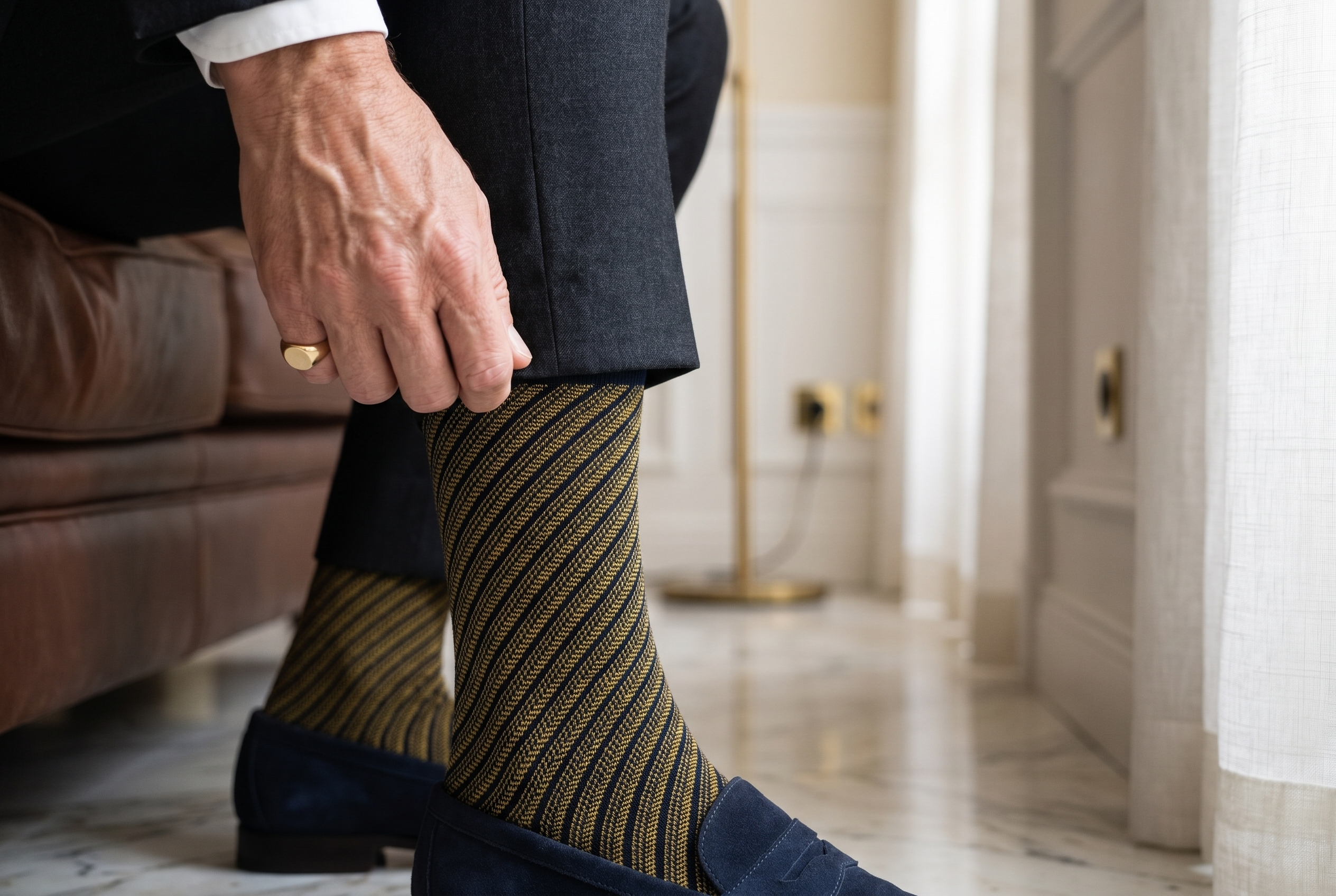
In a sector where haste often wins, they chose care: artisanal workmanship, attention to finishes, and production discipline. Because a sock may seem like a "simple" product, but when it is made truly well, you can tell: in the fit, in the durability, and in the feeling of precision it leaves on you.
In the early years, demand came mainly from small merchants and representatives in Central and Southern Italy. It was work built in the field, made of reliable deliveries and consistent quality. Then, in the mid-90s, a decisive milestone arrived: the German market. It was a real litmus test—because it is not enough to "do well" once: you need continuity, regularity, and rigorous standards. That experience raised the bar and strengthened their method: more solid organization, tighter control, and even greater attention to detail.
With the arrival of the euro and the acceleration of globalization, prices, competition, and balances changed. And in the 2000s, the company reacted the way solid businesses do: it invested.
By expanding its machinery and evolving its production capacity, it added large-scale retail to its traditional client base, a channel that demands continuity and high standards. Entering it without losing one's identity is no small feat: it means holding firm to quality even when the pace accelerates. Here, the family business dimension becomes a concrete advantage: clear responsibility, rapid decision-making, and a daily presence on the work floor.
In every phase, however, the constant remained the same: artisanal workmanship and 100% quality control, as an operational choice rather than a slogan—constant attention, rigorous checks, and discarding anything not up to par. Added to this is a precise selection of materials: fine yarns for demanding customers, such as extra-long staple Mako cotton, chosen for its softness, resistance, and lasting performance.
In the 2010s, the company went through another important test: economic crisis, uncertain consumption, pressure on margins. It overcame that period by consolidating what it had built in the previous years: skills, processes, and a culture of work. This is where experience becomes an asset: not improvisation, but method; not just "getting by," but choosing what to defend and what to improve.
Today, the challenge is new and closer to the people: bringing the product directly into homes, without filters, letting people know what an artisanal sock really means—beauty, elegance, and durability over time. Because those who choose a well-made sock are not just buying an accessory: they are buying comfort, reliability, and a quality that is recognizable and stands the test of time.